Svalbard wildlife and where you might see it
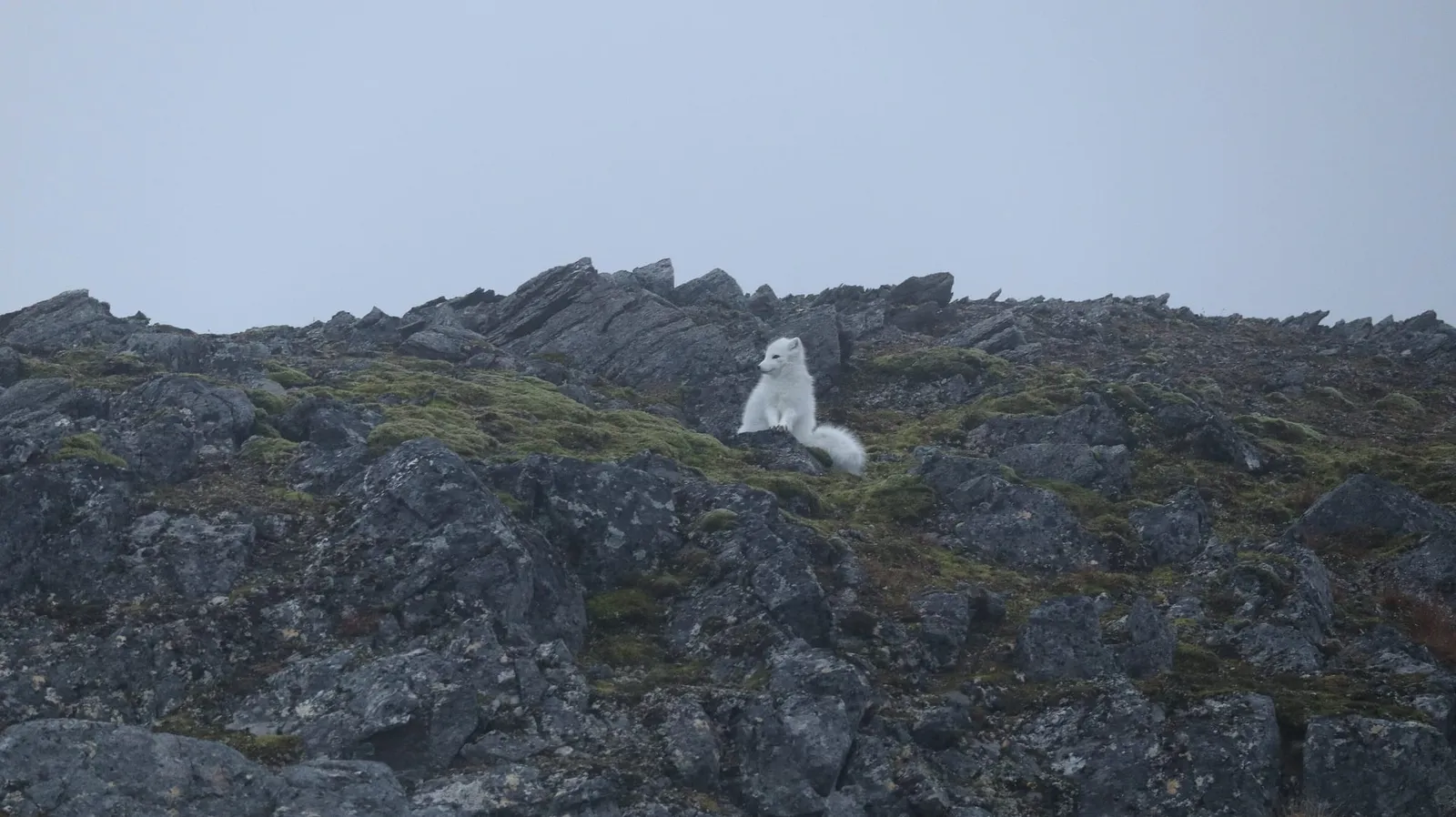
Photo: Nancy Porcino, CC BY-SA 4.0

Svalbard has few species, but the ones it has are remarkable, and many are easy to see. Only three land mammals live here, but the seas around the islands hold polar bears, walruses, five species of seal and twelve species of whale, and every summer hundreds of thousands of seabirds arrive to breed. This guide covers what you’re likely to see, and where.
Most wildlife is around from May to August, when the migratory birds and whales arrive and the breeding season is in full swing. In winter only the hardiest species stay, such as reindeer, Arctic foxes and the rock ptarmigan.
On land
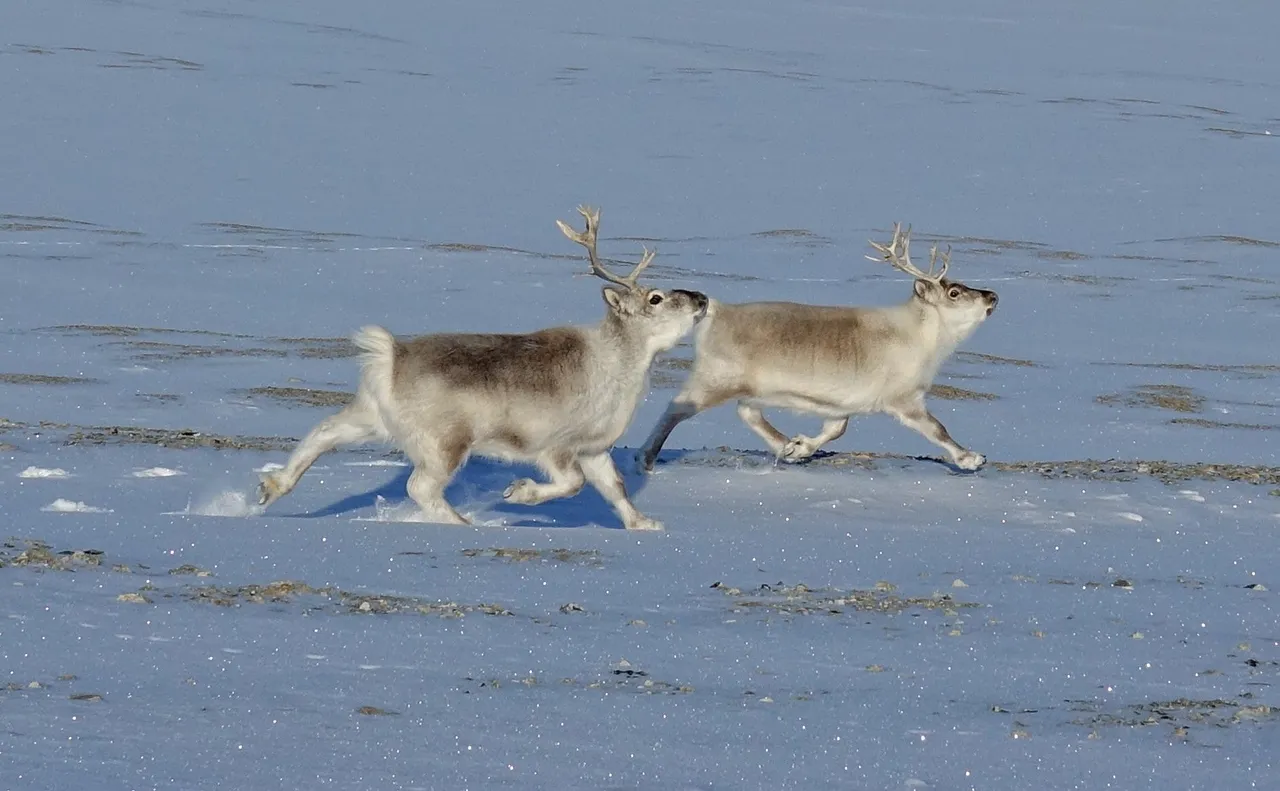
Svalbard reindeer
The animal you’re almost certain to see. The Svalbard reindeer is a subspecies found only in Svalbard: short-legged, stocky and thick-coated. You may well see them grazing in Adventdalen, for example on an ATV safari.

Arctic fox
The Arctic fox is Svalbard’s land predator and scavenger, living on birds and their eggs around the bird cliffs, and on reindeer and seal carcasses. Foxes hunt around the bird cliffs, and you may also spot one in Adventdalen.
Don’t touch any fox, alive or dead. Rabies has been found in Svalbard’s wildlife, and the Arctic fox is the main carrier. Report sick or dead animals to the Governor.
Svalbard rock ptarmigan
The only bird that lives in Svalbard all year round, and a subspecies found only here and in Franz Josef Land. It’s white for most of the year and turns brown-speckled in summer, so it’s easy to overlook until it moves.
At sea and on the shore
Walrus
Walruses were hunted almost to extinction in Svalbard over 350 years, but their numbers are growing again: about 3,900 were counted in 2012, most of them males. Adult males can be more than three metres long and weigh up to two tonnes, and they’re extremely social, lying in tight heaps on the shore. Walrus safaris run from Longyearbyen in summer, and expedition cruises may visit haul-outs too.
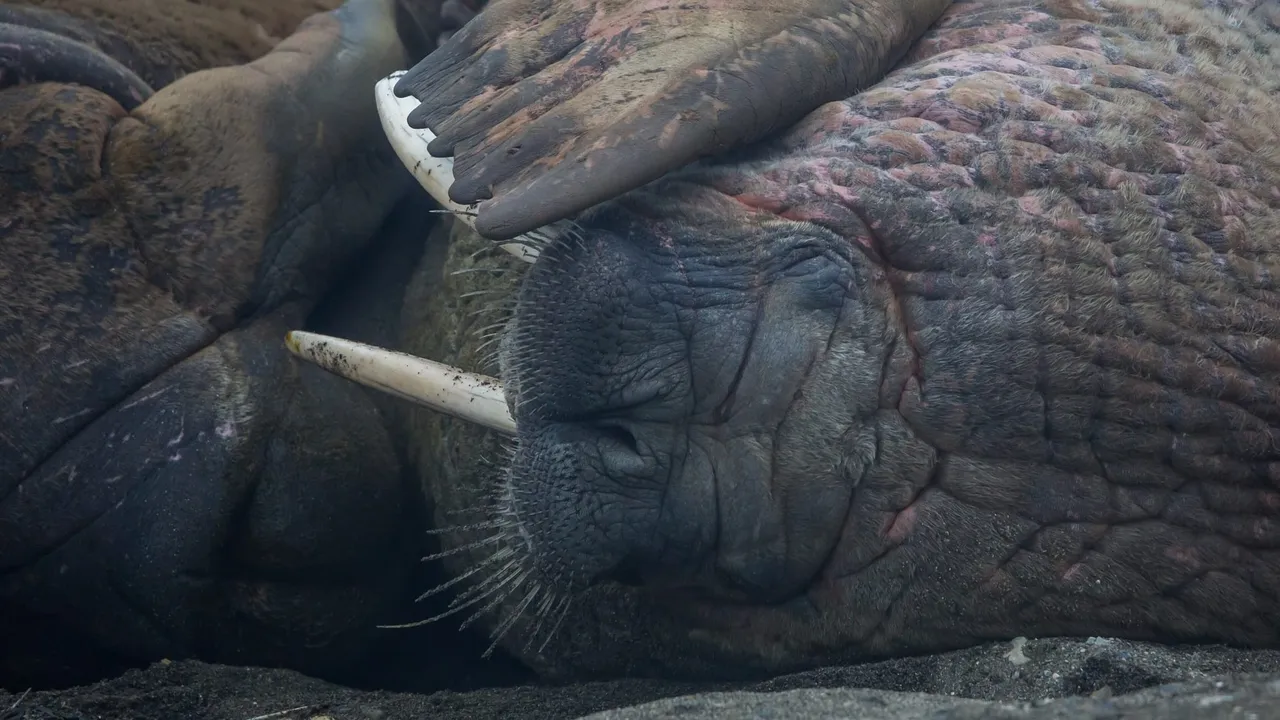
Photo: Andreas Weith, CC BY-SA 4.0
_resting_in_a_crowd_on_Wahlberg%C3%B8ya,_Svalbard_(2).jpg)
Seals
Five species of seal live around Svalbard. The ringed seal is the most common, with an estimated 100,000 animals. The bearded seal is also common. On the west coast of Prins Karls Forland lives the world’s northernmost population of harbour seals.
Whales
Three whale species live in Svalbard waters all year: the beluga, the bowhead and the narwhal. In summer, others come north to feed: minke, fin and humpback whales, killer whales and white-beaked dolphins are the most commonly seen. Whale safaris run from Longyearbyen in summer, but sightings are never guaranteed.
Seabirds
At least 30 migratory bird species come to Svalbard every summer to breed, and more than 200 species have been seen in the archipelago in total. The ones you’ll notice:
- Little auks, the most numerous bird in Svalbard, with close to a million pairs.
- Brünnich’s guillemots, about 850,000 pairs, packed onto the ledges of the big bird cliffs.
- Black-legged kittiwakes, about 270,000 pairs.
- Atlantic puffins, about 10,000 pairs.
- Arctic terns, which nest in open colonies on the ground. Keep out of them.
- Geese: barnacle, pink-footed and brent geese nest in Svalbard.
- Ivory gulls, a rare high-Arctic gull that follows the sea ice. Its numbers in Svalbard have fallen by about 7% a year over the last decade.
Boat trips from Longyearbyen visit bird cliffs in summer. In July, you can watch young birds leap from the cliffs at Trygghamna for the first time.
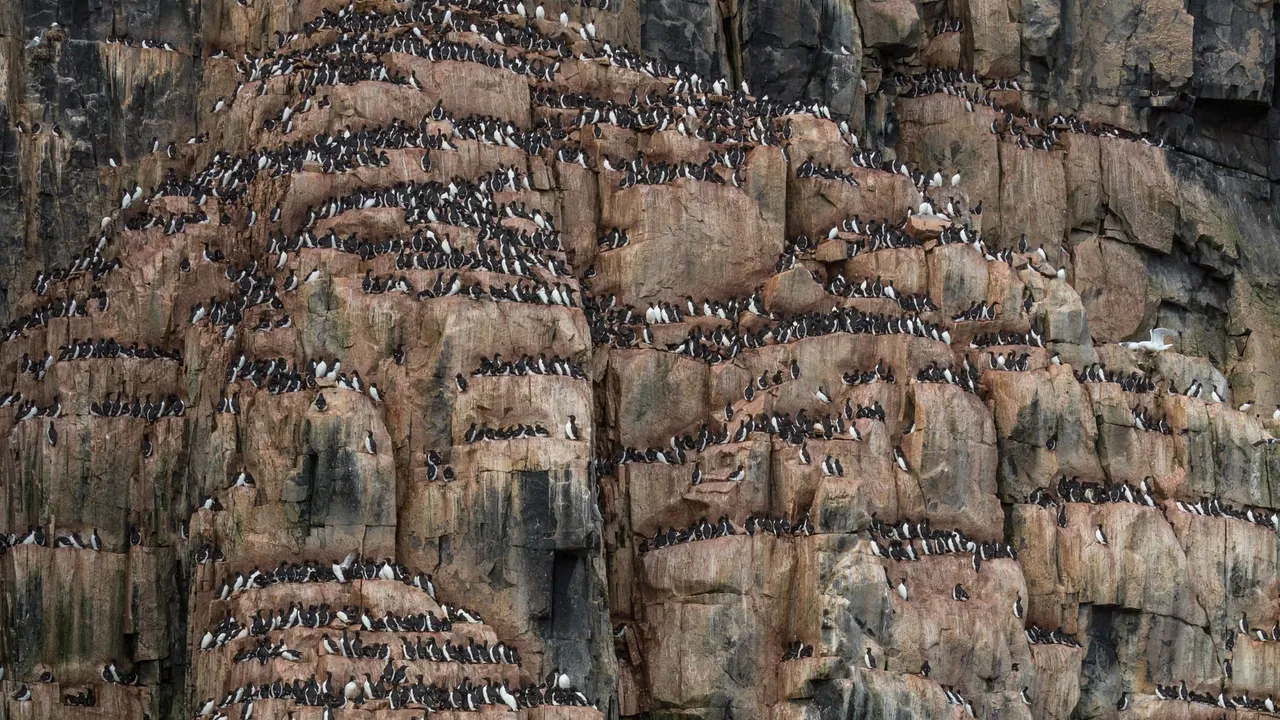
Photo: Andreas Weith, CC BY-SA 4.0
_at_Alkefjellet,_Svalbard.jpg)
Polar bears
The animal everyone hopes to see, and the one you should never go looking for on your own. There are around 3,000 polar bears in the Svalbard and Barents Sea region, about 300 of them living on Svalbard all year. They depend on sea ice to hunt seals, and climate change is the main threat to them.
No tour from Longyearbyen seeks out polar bears, and none can promise a sighting. Your best chance is from the deck of an expedition cruise ship. See Polar bear safety and Choosing an expedition cruise.
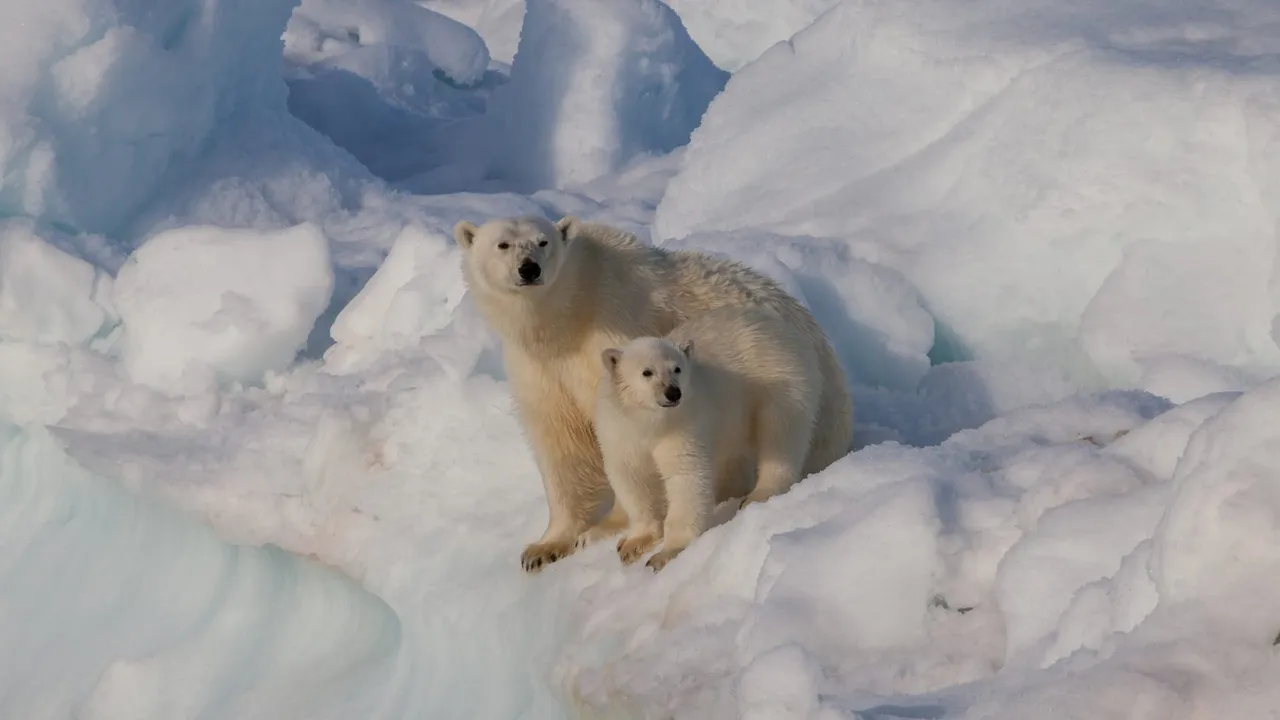
Photo: Andreas Weith, CC BY-SA 4.0
_with_cub,_Svalbard.jpg)
Watching wildlife responsibly
- Keep your distance. For polar bears the legal minimum is 300 metres, and 500 metres from 1 March to 30 June. Don’t approach walrus haul-outs closely, and keep your distance from walruses in the water if you’re in a kayak or small boat.
- Never disturb wildlife. It’s against the law in Svalbard, and it includes chasing animals for a better photo.
- Avoid nesting birds. Stay out of Arctic tern colonies, and keep back from bird cliffs when the chicks are fledging. Drones are banned within 500 metres of bird cliffs from 1 April to 31 August. See Drone rules.
- Leave seals in peace, especially during the moulting season.
Practical info
- Getting there
- Reindeer and foxes can be seen on trips from Longyearbyen. Walruses, whales and bird cliffs on boat trips in summer. Polar bears mostly from expedition cruises.
- Season
- Most wildlife from May to August. In winter, mainly reindeer, Arctic foxes and rock ptarmigan.
- Cost level
- high
- Booking tips
- Book walrus, whale and bird cliff boat trips for summer. Bring binoculars. No trip can promise a polar bear.
Sources
- https://cruise-handbook.npolar.no/en/svalbard/wildlife.html
- https://mosj.no/en/indikator/fauna/terrestrial-fauna/svalbard-reindeer/
- https://mosj.no/en/indikator/fauna/terrestrial-fauna/arctic-fox/
- https://mosj.no/en/indikator/fauna/terrestrial-fauna/svalbard-rock-ptarmigan/
- https://mosj.no/en/indikator/fauna/marine-fauna/walrus/
- https://mosj.no/en/indikator/fauna/marine-fauna/polar-bear/
- https://mosj.no/en/indikator/fauna/marine-fauna/brunnichs-guillemot/
- https://mosj.no/en/indikator/fauna/marine-fauna/ivory-gull/
- https://svalbardmuseum.no/en/birds
- https://svalbardmuseum.no/en/whales-and-seals
- https://svalbardmuseum.no/en/walrus
- https://en.visitsvalbard.com/things-to-do/activities/boat-trips
- https://en.visitsvalbard.com/things-to-do/activities/atv-safari
- https://en.visitsvalbard.com/visitor-information/polar-bears
- https://www.sysselmesteren.no/en/news/2024/12/new-environmental-regulations-enters-into-force-on-1-january/
- https://www.mattilsynet.no/dyr/dyresykdommer/rabies/rabies-pa-svalbard