Polar bear safety
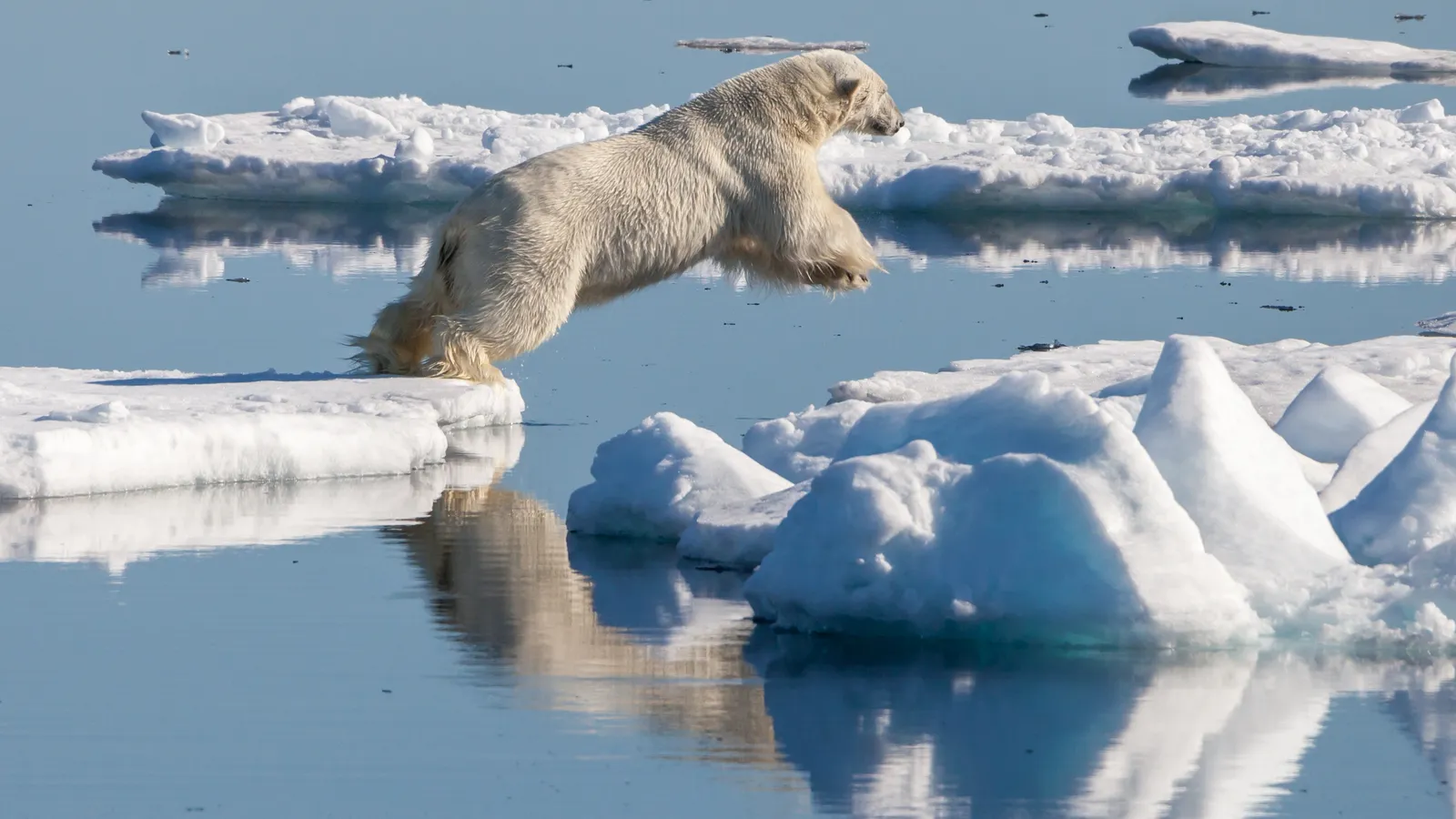
Photo: Andreas Weith, CC BY-SA 4.0
_in_the_drift_ice_region_north_of_Svalbard.jpg)
Polar bears live all over Svalbard, and you can meet one anywhere, at any time of year. There are around 3,000 bears in the Svalbard and Barents Sea region, about 300 of which stay on Svalbard all year. The polar bear is one of the world’s largest predators and dangerous to humans: adult males usually weigh 300–600 kg, and a bear can run at up to 8 metres per second (more than 30 km/h) over short distances. They are also strong swimmers.
The bears are unconditionally protected. The rules below exist to keep both you and the bears alive. This page is part of our Safety in Svalbard guide.
The short version for most visitors
- Inside the town limits of Longyearbyen you can walk on your own, as long as you don’t pass the polar bear warning signs.
- Outside them, go with a guide. An organised tour with a local guide is the safest choice, for you and for the bears. On an organised tour, the operator provides the protection.
- Never approach a bear, and keep your distance (see below).
What the law requires outside the settlements
Under section 30a of the Svalbard Environmental Protection Act, anyone travelling outside the settlements, except visitors and residents on organised tours, must:
- know the safety measures for polar bears, and take the measures needed to avoid an attack and to fend one off without injuring or killing the animal;
- carry suitable means of frightening and chasing off polar bears, such as a flare gun or thunder flashes.
You should also carry a rifle, .308 Win calibre or higher. Above all, you need to know how to use both the deterrents and the rifle.
It is prohibited to lure, pursue or otherwise seek out polar bears in a way that disturbs them or puts bears or people in danger.
Keep your distance
Since 1 January 2025 you must keep at least 300 metres from a polar bear, and at least 500 metres from 1 March to 30 June. If you find a bear at close range, you are obliged to retreat. The best way to see a bear is undisturbed, at long range, through binoculars.
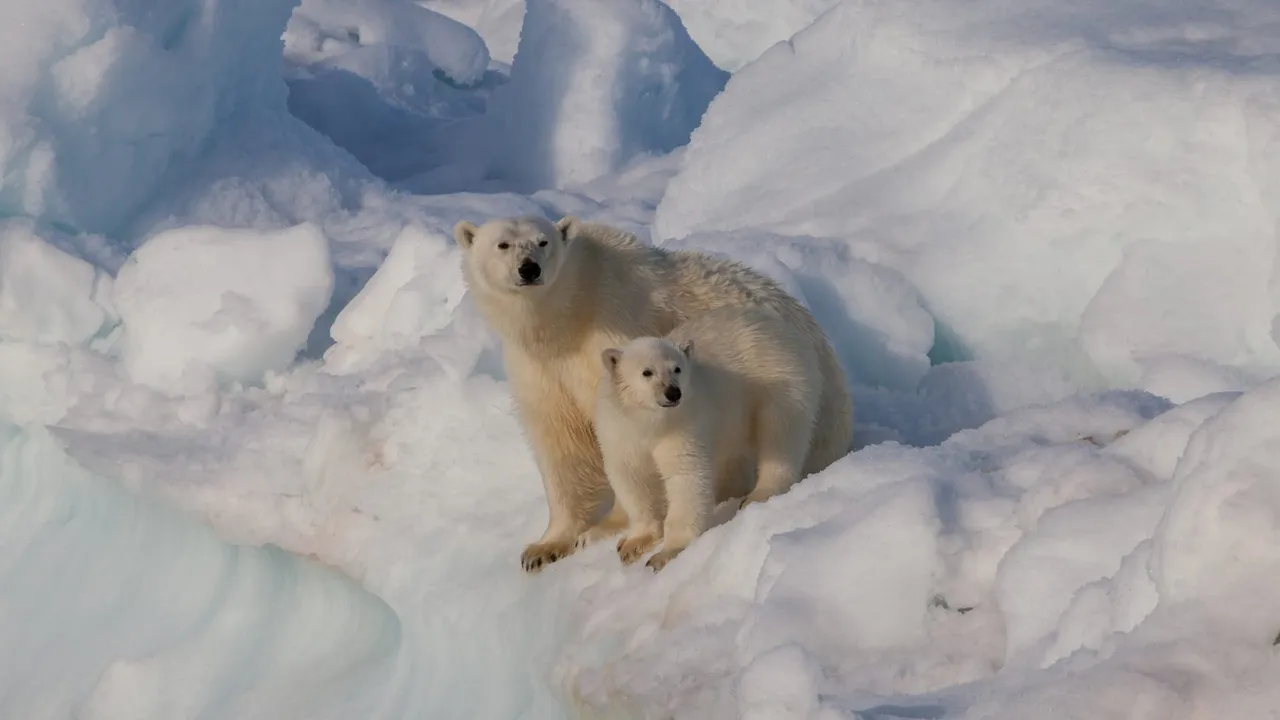
Photo: Andreas Weith, CC BY-SA 4.0
_with_cub,_Svalbard.jpg)
Firearms: carrying, renting and bringing your own
The rules below follow the Governor of Svalbard’s firearm guidelines, in force since 13 May 2024.
Approved protection:
- Rifles: only bolt-action rifles in .308 Win or .30-06 Sprg are approved, with expanding ammunition that meets minimum energy and bullet-weight requirements. A rifle is the recommended primary protection, ahead of other weapon types.
- Signal pistols, signal pens and trip flares need no licence, and can be bought, borrowed or rented as deterrents.
- Bear spray and pepper spray are not allowed. Pepper spray is prohibited in Norway, and no licence is granted for it as polar bear protection.
Renting a rifle in Longyearbyen:
- You can rent a rifle, but not a shotgun or a revolver.
- Rentals are only through licensed arms dealers.
- You must show a Norwegian firearms licence, a European Firearms Pass, or a valid loan permit from the Governor. Loan permits are assessed like an application to buy a firearm, and you have to document “adequate weapon proficiency”: for example sport shooting, military service, registration as a hunter in Norway, or an approved weapons safety course.
- Carry the rental declaration together with your licence or permit whenever you carry the weapon.
Bringing your own firearm (foreign visitors):
- With a European Firearms Pass, you can bring an approved rifle or shotgun for up to three months.
- Without one, apply to the Governor at least two months before arrival.
- Revolvers and semi-automatic weapons can’t be imported for this purpose.
- If you live in mainland Norway, apply to your local police instead.
In the settlements:
- Carrying a loaded firearm is illegal. Carry it so that everyone can see it’s empty, with the bolt removed.
- Firearms are not allowed in shops or public buildings.
- Flare guns must not be loaded in built-up areas.
If you see a polar bear
What to do, in order:
- Don’t approach it, under any circumstances.
- If it follows you and you can’t get away, try to scare it off. Keep the group together, make as much noise as possible and act confident. Start using your deterrents from at least 200 metres, and place the flares in front of a bear that is coming towards you.
- If it isn’t frightened off and the situation could become fatal, prepare to shoot.
- Decide on a point or line in the terrain, and fire if the bear crosses it. Aim for the heart or lungs (the shoulder) if possible, and keep firing until you are certain the animal is dead.
A polar bear may only be killed in an emergency, when there is no other way to save a human life or prevent injury. If you have killed or shot at a polar bear, report it to the Governor immediately. Every such incident is investigated.
Camping
- Keep a polar bear watch. Have someone on watch, supplemented by tripwires or dogs trained to warn of bears. Not all dogs will warn you, and bears have got through tripwires without setting them off. Tripwires can never fully replace an alert watch.
- Choose your site carefully. Bears often move along the shoreline and on the ice, and tents make them curious. Pick a spot with a good view, a long way from the sea.
- Manage food. If possible, don’t cook in the tent, as the smell can stick to the canvas. Store food and place the latrine away from camp, but where you can still see them.
- Keep deterrents and the rifle within reach at all times.
Bears in town
Polar bears are seen in the settlements from time to time, especially in the dark season. Report any sighting in or near a settlement to the Governor immediately: call 112 in an emergency.
Practical info
- Getting there
- Guided trips from Longyearbyen include polar bear protection. Independent travel outside the settlements requires deterrents; a rifle is strongly advised.
- Season
- Bears can be met anywhere in Svalbard all year. The 500-metre distance rule applies from 1 March to 30 June, 300 metres the rest of the year.
- Cost level
- high
- Booking tips
- Go guided unless you're trained. To rent a rifle, sort out the Governor's loan permit well in advance. Bear spray isn't allowed.
Sources
- https://www.sysselmesteren.no/contentassets/5f359e34e35d43a7a29f36064eaebc1c/folder_sysselmannen_svalbard_a5_engelsk.pdf
- https://www.sysselmesteren.no/contentassets/b742146c2a1b45afba09b87b8135fc3f/the-governor-of-svalbards-guidelines-for-firearms-and-protection-and-scaring-devices-against-polar-bears.pdf
- https://www.sysselmesteren.no/en/weapon/
- https://www.sysselmesteren.no/en/travel-in-svalbard/
- https://www.sysselmesteren.no/en/news/2024/12/new-environmental-regulations-enters-into-force-on-1-january/
- https://www.sysselmesteren.no/en/contact/
- https://en.visitsvalbard.com/visitor-information/polar-bears
- https://en.visitsvalbard.com/visitor-information/faq
- https://en.visitsvalbard.com/visitor-information/rules-of-svalbard-and-safety