Northern lights and the polar night
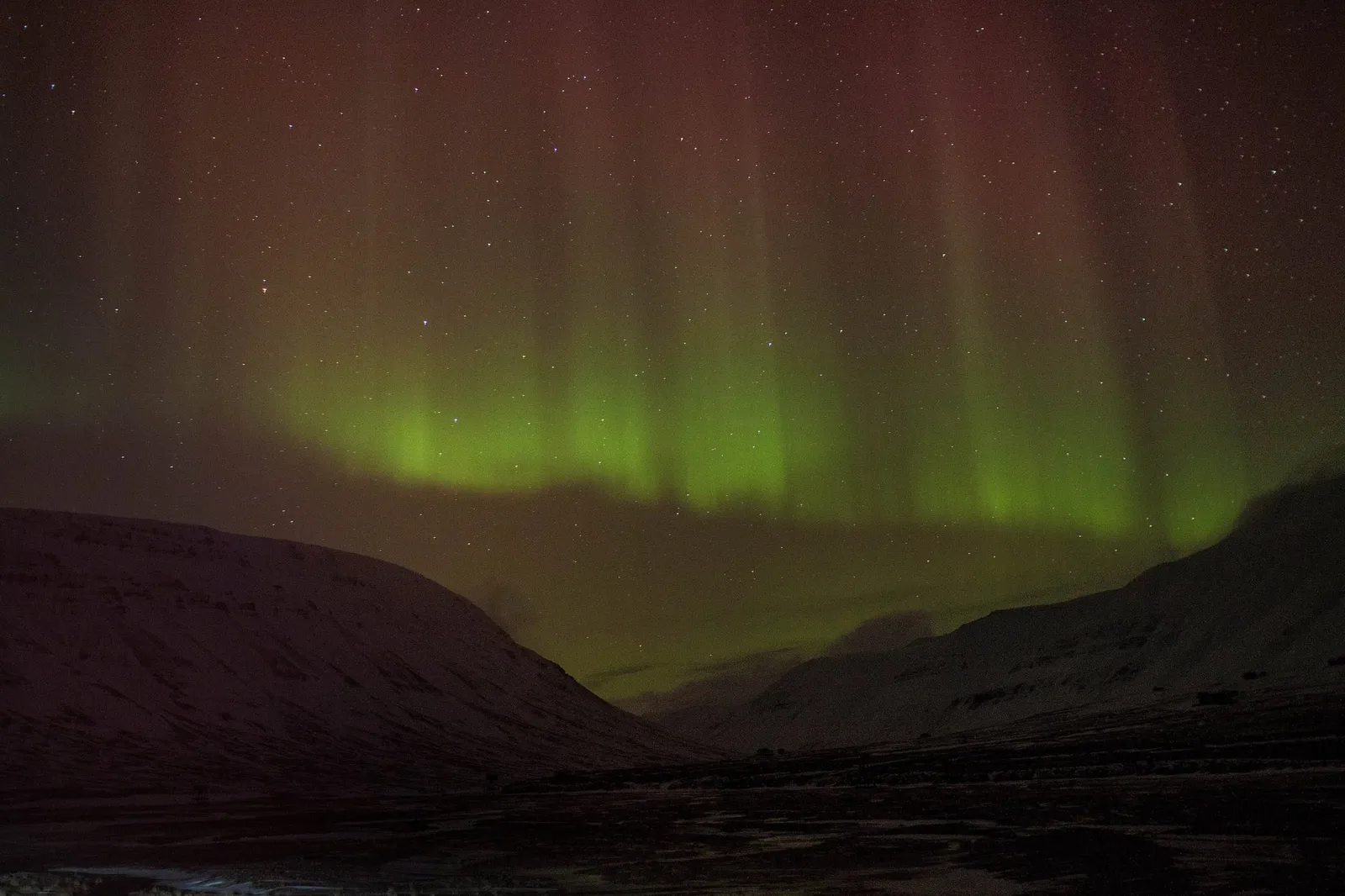
Photo: Martyn Smith, CC BY 2.0

For a few months each winter, the sun doesn’t rise over Longyearbyen at all. It sounds bleak, but the polar night is one of the most magical times to visit: blue light at midday, cosy evenings in town, and a real chance of seeing the northern lights in the middle of the day.
The dark season in numbers
| Dates in Longyearbyen | |
|---|---|
| Dark season, no sun above the horizon | Late October to mid-February, 113 days |
| Polar night, no daylight at all | About 14 November to 29 January |
| Blue twilight | October and February |
| Best northern lights season | About 26 October to 16 February |
| The sun returns to the old hospital steps | 8 March |
In the polar night the sun stays more than six degrees below the horizon all day, so there’s no daylight. Either side of it, in October and February, the sun sits just below the horizon, and the long civil twilight colours the landscape blue, pink and purple. Even in the depth of the polar night there’s a faint glow of twilight on the horizon around midday, though the mountains around Longyearbyen often hide it.
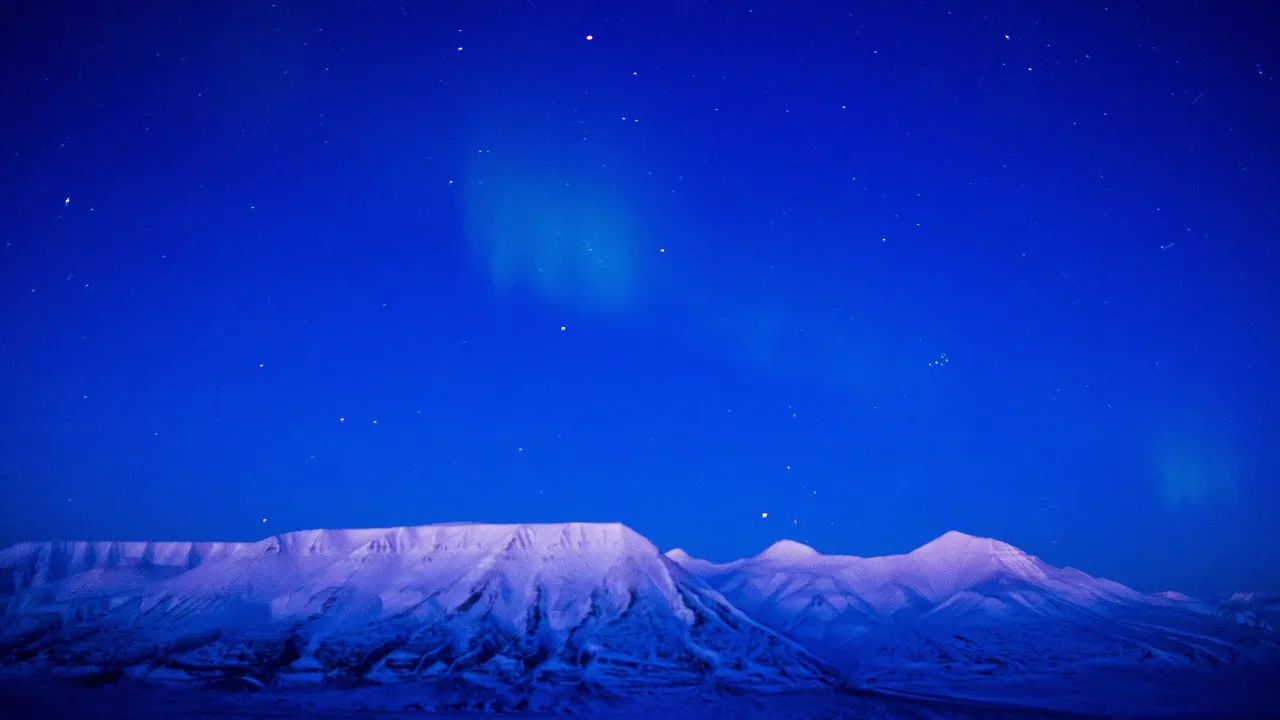
Photo: Frode Ramone, CC BY 2.0
.jpg)
Northern lights at midday
In most places you can only see the northern lights at night. In Svalbard you can see them in the middle of the day, for two reasons:
- It’s dark all day. During the polar night there’s no daylight to drown out the aurora.
- Svalbard sits under the dayside aurora. Above the archipelago there’s a funnel-shaped region in Earth’s magnetic field, the cusp, where particles from the sun can enter the upper atmosphere directly. That gives Svalbard a dayside aurora that much of the world never sees, and in midwinter you can see both the night-time and the daytime aurora from here.
That’s why the University Centre in Svalbard (UNIS) runs the Kjell Henriksen Observatory near Longyearbyen, the largest optical observatory for auroral research in the world.
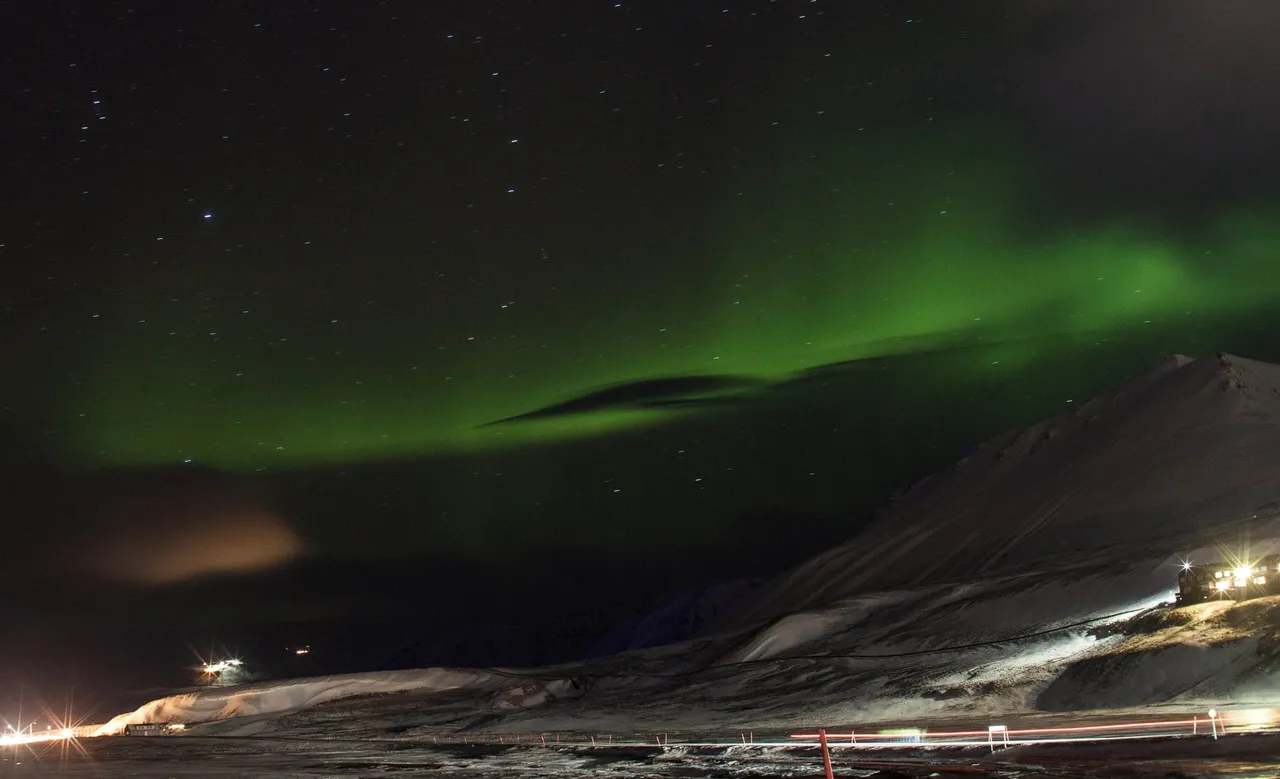
Photo: Martyn Smith, CC BY 2.0

How to see them
- Come between late October and mid-February. That’s the northern lights season; after that, the sun starts to return and the nights get lighter.
- Get away from the lights of town. Guided northern lights trips go out by snowmobile, dog sled, snowcat, boat or minibus to darker places outside town. In the polar night they run all day long.
- Check the forecast. The Kjell Henriksen Observatory publishes aurora forecast tools at kho.unis.no.
- Be patient. The aurora comes and goes, and clouds can hide it. No tour can promise a display, so give yourself several nights.
Remember that outside the town limits you need polar bear protection, which in the dark is one more reason to go with a guide. See Polar bear safety.
What to do in the polar night
There’s more to do than you’d think, mostly by headlamp and moonlight:
- Dog sledding, snowmobiling and snowcat trips across Adventdalen, once the snow arrives, usually in December.
- Ice caves, ski touring by headlamp and hiking.
- Boat trips still run into late November or early December, including evening trips to look for the northern lights.
- Town life. The polar night is the cosiest time of year in Longyearbyen, with restaurants, museums, galleries and cafés. See Dining in Longyearbyen and What to do in Longyearbyen.
Festivals in the dark
- Dark Season Blues, the world’s northernmost blues festival, at the start of the dark season. In 2026 it runs from 22 to 25 October.
- Christmas and New Year celebrations in December.
- Polarjazz in early February.
- Solfestuka, the sun festival week: on 8 March the town gathers on the old hospital steps to welcome the sun back.
Coping with the cold and the dark
- Dress for it. Normal winter temperatures run from −11 °C down to −30 °C, and wind makes it feel colder. Wool layers and windproof outer clothing are essential.
- Bring a headlamp. You’ll use it every day.
- Plan around the light, not the clock. Book a few things in the middle of the day, and keep evenings free for northern lights.
Practical info
- Getting there
- Flights to Longyearbyen run all year. Northern lights trips leave from town, many with hotel pick-up.
- Season
- Northern lights season about 26 October to 16 February. Polar night about 14 November to 29 January.
- Cost level
- high
- Booking tips
- Plan several nights for the aurora. Book snow-based trips from December. Bring wool layers and a headlamp.
Sources
- https://en.visitsvalbard.com/inspiration/various/the-polar-night-in-svalbard
- https://en.visitsvalbard.com/inspiration/various/the-svalbard-light
- https://en.visitsvalbard.com/visitor-information/seasons
- https://en.visitsvalbard.com/things-to-do/activities/northern-lights-adventures
- https://en.visitsvalbard.com/whats-on/dark-season-blues-p2521203
- https://en.visitsvalbard.com/whats-on/polarjazz-festival-p2521283
- https://www.lokalstyre.no/engelsk/longyearbyen-local-council/services/culture-sports-and-leisure/archive-for-culture-sports-and-leisure/2026-02-11-now-were-going-to-celebrate-the-return-of-the-sun
- https://kho.unis.no/
- https://doi.org/10.1139/as-2024-0009
- https://medium.com/@cdnsciencepub/aurora-science-at-the-kjell-henriksen-observatory-in-svalbard-2e38d4d93ad0
- https://en.visitsvalbard.com/visitor-information/travel-information/how-to-dress-in-svalbard
- https://www.sysselmesteren.no/contentassets/5f359e34e35d43a7a29f36064eaebc1c/folder_sysselmannen_svalbard_a5_engelsk.pdf